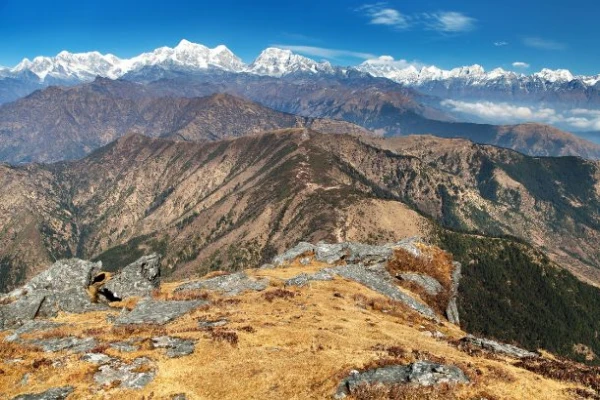
Three High Passes of Everest TrekkingThree High Passes of Everest Trekking

Three High Passes of Everest Trekking

Highlights
  • Thrilling navigation of the high passes of the Khumbu region with stunning mountain views
  • Get to witness the magnificent Himalayas like Everest, Cho-Oyu, Thamserku, Lhotse,  Amadablam and other neighboring mountain peaks
  • Explore Sherpa hamlets, traditional farming methods and vibrant local festivals 
  • Take adventure walks in the shade of Mount Everest, with the scenic views of the giant Himalayas 
  • Follow the raging Dudh Koshi River straight to its glacial source at Everest Base Camp
  • Start and end the trip with an exciting flight between Kathmandu and Lukla 

 At Explorer Adventure, we offer the 21-day Everest Three Pass Trekking package. It is an adventurous journey within the scenic Khumbu Valley. The trek leads you to the Eastern Himalayas where you will traverse the area beneath Mount Everest and other tall mountains. This is a thrilling walk over the three high passes of the Everest region with the breathtaking panoramic view at each pass. 

The Everest Three Passes Trek provides an authentic Himalayan trek experience which enables trekkers to discover the Himalayan region completely. The high mountain passes of the Everest Three Pass Trekking journey include Kongma La Pass (5,535 m) and Cho La Pass (5,420 m) and Renjo La Pass (5,360 m). The passes provide trekkers with stunning vistas of snow-covered mountains, glaciers and isolated valleys that only a few hikers can ever get to see.

The journey will take you to famous sites which include Everest Base Camp, Kala Patthar and the beautiful Gokyo Lakes. The trek enables visitors to discover Sherpa traditions through the mountain towns, old monasteries and Sherpa villages.

The trek requires trekkers to reach heights beyond 5,500 meters which makes it a rigorous route that needs exceptional physical condition, proper altitude adjustment and previous experience with high-altitude trekking. Trekkers need to prepare themselves for extended hiking sessions which include steep climbs, fluctuating weather conditions and basic mountain lodging facilities.

Overall, the Everest Three Pass Trek provides trekkers with a complete high altitude adventure which combines extreme difficulty with breathtaking natural landscapes and rich local culture. The trails provide an ideal trekking experience for advanced trekkers who want to travel through unmarked paths to discover the unspoiled natural landscapes of the Everest region.

Itinerary Overview

Our journey to the Everest Three Pass Trekking starts with a panoramic flight towards the airstrip of Lukla town. This is where all treks and adventures in the Everest region begin. 

As we walk past the traditional farm villages of Ghat, Phakding and Monjo, we can witness the Sherpa culture and customs which are highly influenced by Tibetan Buddhism. Then we can enter Sagarmatha National Park. This park has been listed in World Heritage Sites since 1991 to protect the nature and culture of the Khumbu area. Then our route leads us into the lovely forested areas before ascending high to Namche Bazaar. 

At Namche Bazar, we spend a day acclimatizing and take short, scenic hikes to its viewpoints. Then our route leads us towards the remote end of the Khumbu area at Thame. It is a quaint village with an old monastery of spiritual significance. 

Then we head towards our first pass of the adventure, Renjo-La (5,360 m), to reach the beautiful Gokyo valley. This valley is located at the base of Mount Cho-Oyu, the sixth-highest mountain in the world. Here we spend a pleasant time before heading towards our second pass, Cho-La (5,420 m), to reachEverest Base Camp.

We will spend a wonderful time with the views of the massive Khumbu Icefall and glaciers. Then we climb to the highest point of the adventure at Kala Patthar with an altitude of 5,545 m. It displays the panoramic views of Everest and the surrounding peaks. 

Our adventure continues toward our last and final pass of the three passes, Kongma-La at 5,535 m. We take a slow climb over the Khumbu glacier and a moraine to reach the top. Finally, we descend towards the beautiful valley of Imja at Dingboche. 

Our walk completes in Lukla for a scenic flight back to Kathmandu, filled with unforgettable memories of the Everest Three Pass Trek.  

Itinerary

Our representative will greet you at Tribhuvan International Airport (TIA) and take you to your hotel.

After you check into the hotel rest and recuperate from your jet lag in the comfortable and peaceful environment. The guide will provide you with a complete briefing about the upcoming trek and accommodation details. you will have every essential travel information at your designated gathering point in the hotel lobby or main hall.

Your group will dine together at a Nepali restaurant which serves traditional dishes and presents a lively cultural show for your first evening. The night comes alive with folk music and traditional dances which offer a wonderful introduction to the country’s rich heritage and warm hospitality.

    The tour begins when you depart your hotel after breakfast. Your guide will lead you to explore Kathmandu's most interesting sites.

    Kathmandu as a modern city maintains its active urban life which coexists with its historical and cultural traditions. You will visit the UNESCO World Heritage Sites. The historic Kathmandu Durbar Square is the ancient royal palace courtyard filled with intricate architecture and centuries of history. On the other hand, Swayambhunath Stupa provides panoramic views of Kathmandu Valley.     

    The journey then leads to the majestic Boudhanath Stupa, often called “Little Tibet,” where prayer flags flutter above one of the largest Buddhist stupas in the world. The Pashupatinath Temple serves as an important Hindu temple dedicated to Lord Shiva which you can find along the Bagmati River banks.

    The cultural exploration program ends and you will drive to the hotel. You will spend your free time resting and preparing for your upcoming Everest Three High Passes trek.

      At 5:00 or 6:00 AM, we will take you to the domestic terminal of Tribhuvan International Airport, which will lead to your exciting short flight to Lukla, the starting point for Everest region trekking expeditions.

      Your trek begins with an easy and delightful walk that follows a winding path through beautiful Sherpa villages with agricultural fields. The trail provides opportunities to view stunning mountain peaks, including Kongde Ri and Kusum Kanguru which enhance your trail experience during your first hiking day. 

      The path leads you to Phakding, which is a serene village that lies next to the glacial Dudh Koshi River. You will spend your first night in the mountains at this location which offers you an amazing view of the peaceful Himalayan landscape.     

        The walk today takes you to Namche Bazaar while your elevation continues to rise throughout the entire walk. The morning begins by following the rushing waters of the Dudh Koshi River which walkers must cross multiple times using suspension bridges that create an adventurous atmosphere along the path. You will walk through the Monjo village which lies close to the entrance of Sagarmatha National Park.  

        The path from this point follows a beautiful river valley across a narrow gorge and dense forests of tall rhododendron, pine and fir trees. This section becomes more enjoyable because of the beautiful natural scenery and the refreshing mountain atmosphere.

        The trail starts to become more difficult after you cross the last suspension bridge and climb uphill for about three hours. The higher you move up the mountain, the better your views become of Mount Everest, Lhotse and Kongde Ri.

        You will reach Namche Bazaar which stands at approximately 4,440 meters above sea level. The lively atmosphere of Namche is an ideal place to rest, acclimatize and enjoy the mountain views.

          The day is set aside for both rest and adaptation to the altitude. Namche Bazaar is an ideal spot for that before the team begins its ascent to higher altitudinal areas. After breakfast you can choose to either hike to the Everest View Hotel through picturesque trails or walk across the Namche for breathtaking views.

          You can admire spectacular Himalayan giants including Mount Everest, Lhotse and Ama Dablam along with a sweeping range of surrounding peaks.

            The walking route starts from Namche Bazaar and leads through a picturesque path that features gentle hills and offers breathtaking views of Mount Everest and other major Himalayan summits. The path takes a downward slope which leads to Imja Khola before reaching Phunki Tenga, a small riverside area that contains several lodges which serve as ideal spots for visitors to take breaks and have their meals.

            The path from this point ascends through an alpine forest which contains rhododendron, pine and fir trees to create a charming and peaceful atmosphere. The rising terrain reveals to you the breathtaking landscape which contains Tengboche Monastery, a vital spiritual site for the local area.

            The area of Tengboche provides a peaceful experience which is a viewpoint for the entire Himalayan mountain range, including Mount Everest and Ama Dablam peak. The monastery awaits your visit which enables you to witness monks and priests as they practice their daily prayers which will create a spiritual experience for your trip.

            The October festival of Mani Rimdu takes place at Tengboche according to the Buddhist lunar calendar which makes the place a popular destination. 

              You will begin this day's walk by navigating through peaceful forested areas which provide views of Mount Everest and the surrounding mountain range. The path leads you to a metal bridge that crosses a glacial stream and passes multiple mani walls that demonstrate the area's profound religious customs.

              The path continues until you reach Pangboche, a key Sherpa settlement on the path toward Everest Base Camp. The village maintains established lodges that mainly serve trekkers.

              The scenery undergoes a complete transformation as the expedition continues. The dense forests start to disappear while the landscape turns into a dry area where trees stop growing and only low juniper plants and dwarf rhododendron shrubs exist. The path follows an upward route that leads through a river gorge until it reaches a broad glacial valley that experiences strong winds.

              Dingboche is a charming mountain village that features a variety of lodges. The location offers you breathtaking views of Island Peak which stands to the east and a complete view of the surrounding Himalayan mountains. It is an ideal spot to appreciate the unspoiled mountain scenery.


                The second rest day helps you to adjust to the high altitude conditions. The area provides a perfect outdoor space for relaxation with hiking and walking trails enabling visitors to explore.

                The hike to Nangkartshang Peak provides visitors with spectacular views of the mountain, glaciers and rugged valleys. Afterward, you will return to Dingboche and explore the village surroundings.

                  The path from Dingboche to Chhukung offers a less demanding trek. The trail moves eastward through the Imja Valley which presents hikers with an easy ascent toward the high Himalayas. 

                  Walking through the extensive glacial basin which is surrounded by stunning mountain views leads you to Chhukung which is a small and tranquil village. This peaceful location is a crucial rest stop before you attempt the first difficult high passes of your journey.

                  The afternoon provides a chance for you to unwind while enjoying breathtaking views of Island Peak, Lhotse Shar, Lhotse, Nuptse and the famous Ama Dablam mountain.

                  For those who want to explore more, an extra trek leads to Chhukung Ri which stands at 5100 meters and gives you stunning views of both the local scenery and the majestic Himalayan peaks.

                    The trek begins with an early start. It is the most exciting day as you attempt to cross the difficult Kongma La Pass. The path proceeds to Bibre which is an isolated location that lies between Dingboche and Chhukung. You will ascend through a rugged gully that lies under the massive shadow of Nuptse.

                    You will travel through an unfrequented area via a remote trail. On the way, you will cross rocky areas and glacial moraine until you reach the summit of Kongma La which connects to Mehra (Kongma Tse) and Pokalde mountain peaks.

                    The summit of Kongma La at 5,535 meters presents an impressive display of mountain peaks. The descent starts after enjoying the view from the top. You start to head towards the extensive Khumbu Glacier which requires you to traverse multiple moraine sections until you reach Lobuche.

                    After you finish your extensive but rewarding trek through the high Himalayas you will stay overnight at a comfortable lodge with stunning views of Nuptse and Lobuche Peak.

                      Today's excursion leads you to the most famous point of the trek which is Everest Base Camp. The morning walk begins across a wide, open valley, with a gradual ascent alongside the dramatic landscape of the Khumbu Glacier. The path leads you through rocky moraine ridges and glacial terrain until you reach Gorakshep.

                      Gorakshep exists as a small settlement that contains multiple lodges at the point that connects to Everest Base Camp and Kala Patthar. It was as the old Everest Base Camp from the 1950s until the late 1970s.

                      After taking a brief break you will advance toward Everest Base Camp by following the moraine and glacier for several hours. The base camp area provides an exceptional viewing point which showcases towering peaks as well as the breathtaking Khumbu Icefall which flows down from Everest's upper slopes.

                      You will return to Gorakshep after visiting this extraordinary location to spend the night. It is the highest sleeping point of the trip.

                        Your journey begins with an early morning departure from the Gorakshep which leads you to Kala Patthar's rocky viewpoint at 5,545 meters. It is the highest point of your Everest Three Pass Trekking. The summit provides you with a spectacular view which includes Mount Everest and all surrounding peaks that shine with morning light.

                        After enjoying the beautiful view for some time you need to return to Gorakshep in order to have breakfast. From this point you will descend to Lobuche before you further descend towards Dzongla along the downward path.

                        The settlement of Dzongla exists in a tranquil and beautiful area which lies at the foot of the difficult Cho La Pass, which is also known as Tsho-La. It allows travelers to pause their journey before entering the next high mountain pass.

                          You set out early to cross the second high pass of Cho La. The trail begins with a steep and steady ascent over rocky terrain which leads you to the glacier section.

                          The glacier requires you to maintain careful footing because of snowy or icy conditions. The pass summit at approximately 5,367 meters offers you spectacular views of the surrounding Himalayan mountains and Cholatse Glacier.

                          The trail descends through a rugged path which leads to Thagnak (Dragnak) after taking time to rest and take in the stunning natural beauty of the area. The small remote settlement provides a quiet overnight stop which lets you rest after an exhausting yet memorable day spent in the high mountains.

                            The path to the Gokyo Lakes is a brief and satisfying walk. It takes you through the Ngozumpa Glacier which is the Himalayas' longest glacier displaying a breathtaking combination of ice, rock and mountain range beauty.

                            You will discover the first and second Gokyo Lakes before reaching the third Gokyo Lake (Dudh Pokhari). This turquoise alpine lake is sacred among Hindu and Buddhist practitioners, which creates a holy dimension to its unspoiled natural beauty.

                            The Gokyo area is a traditional yak grazing space with wildlife, surrounded by mountain summits that create a dramatic visual display. From this location, you can see the stunning peaks of Cho Oyu and Gyachung Kang which extend across the sky.

                            The afternoon provides opportunities to either unwind in this peaceful high-altitude village or explore the lake area through easy walking paths. You will get to experience the tranquil environment and enjoy the stunning Himalayan views.

                              The ascent through the mountain path takes you to Gokyo Ri which stands at 5,357meters and provides the best view of your entire trek. The continuous uphill path reveals the complete Himalayan mountain range which extends to the farthest point of view.

                              The summit grants you an exceptional opportunity to witness four of the world's tallest mountains which include Cho Oyu, Everest, Lhotse and Makalu along with numerous neighboring snow-covered peaks and glacial valleys.

                              You return to Gokyo after this extraordinary experience to enjoy your well-deserved lunch. You can use the afternoon to take a break while enjoying the outstanding mountain views. The day will help you train your body and mind for the last challenging mountain pass of your trip.

                                The climb becomes increasingly strenuous as you gain altitude, which leads you to reach the top of Renjo La at a height of 5465 meters. The summit provides a unbroken line of Himalayan peaks that extends to every part of the horizon.

                                After a rewarding time at the pass, the descent begins toward a frozen alpine lake below. You will take a long downhill route through rugged terrain. The trail continues until you reach Lungden, which serves as a remote settlement on the path to Nangpa La Pass that leads to the Tibetan border. Here, you will spend the night surrounded by the quiet beauty of the high Himalayas.

                                  The descent begins to Marlung village through a beautiful route. Moving further, the mountainous trails lead to Thame village where you will stop for an overnight stay.

                                  Thame is a remote settlement that offers tranquility to visitors who go to this less traveled destination at the westernmost point of the Khumbu region. Only a small number of trekkers visit this area which is off the standard trekking path. This route is particularly used to cross Renjo La Pass or Tashi Lapcha Pass which connects Rolwaling Valley to the Khumbu area.

                                  The Thame Monastery serves as the essential historic site that visitors must see during their Thame visit. The ancient gompa established more than 500 years ago is a major monastery that provides visitors with a complete understanding of the Khumbu region's spiritual and cultural heritage.

                                    The day begins with a short descent to the Bhote Koshi River which leads into a continuous uphill path until reaching a mountain ridge. From this point onward, the pathway becomes less steep which provides a pleasant route toward the beautiful Thamo village.

                                    Beyond Thamo, the path winds through cool and scenic forested terrain of pine, fir and rhododendron trees. A gentle ascent along this route gradually brings you back to the bustling mountain hub of Namche Bazaar.

                                    After a short rest in Namche the journey continues in the afternoon with a descent toward the Dudh Koshi River. The trail follows the river valley and passes through beautiful landscapes that lead to Monjo village. It is a quiet place to stay overnight which prepares you for the last part of the trek toward Lukla.


                                      The final day of this exceptional trekking journey begins with a morning hike that follows a beautiful pathway that leads down to the Dudh Koshi River which flows toward Phakding. The path provides a pleasant walking experience which includes slight uphill and downhill sections until reaching Cheplung village. The final ascent which lasts for one hour will take you back to Lukla where you will have lunch and spend the night.

                                      The trek ends in Lukla with a final dinner which you share with your fellow trekkers, guides and porters to celebrate your successful completion of the Three High Passes trek.

                                        In the morning, you will be transferred to Tenzing–Hillary Airport. You will board a small aircraft which will operate a scenic 35-minute flight to Kathmandu. The journey provides breathtaking aerial views of the Himalayas which end with a descent into the lively capital city.

                                        We will take you to your hotel in Kathmandu upon your arrival in the city. The afternoon is a free time for yout either relax or explore the city at your own pace.

                                          According to your international flight schedule, we will facilitate a smooth transfer to you at the Tribhuvan International Airport.  Stay ready at the hotel to depart for the airport before our representative comes to pick you up. You will reach TIA well before your departure time to allow you enough time to complete all the check-in and security procedures.


                                            Route Map

                                            Three High Passes of Everest Trekking map
                                            What's Included
                                            • Airport pick up and drop by private vehicle
                                            • Three nights standard Hotel in Kathmandu on twin sharing basis with B.B 
                                            • all domestic flight Kathmandu Lukla Kathmandu 
                                            • Government license holder guide 
                                            • Helpful porter with proper equipments (1 porter for 2 people)
                                            • Salary, food, accommodation and insurance for guide and porters
                                            • Tea house/lodge accommodation during the trek on twin sharing basis 
                                            • Duffel bag for packing your things for the trek 
                                            • Local Entrance fee  for entering to the khumbu valley 
                                            • Sagarmatha National Park entry permit
                                            • Government taxes and official expenses 
                                            What's not Included
                                            • All food pay your self  during the trek  
                                            • Flight to Kathmandu, Nepal
                                            • Tips for porters ($90-120) and guides ($120-150)
                                            • Nepal Visa ($50)
                                            • Insurance (must include emergency evacuation by helicopter, check worldnomads.com
                                            • Food and drinks ($20-30 per day)
                                            • In some places: hot water, wifi, battery charging - $2-5
                                            • Drinking water, price depends on altitude (linear regression)  

                                            Departure Dates

                                            Select a Departure Month
                                            Trip Dates
                                            Price
                                            Availability
                                            Status
                                            Trip DateMar 29, 2026 - Apr 18, 2026
                                            PriceUS$1410
                                            AvailabilityAvailable
                                            Status
                                            Trip DateMar 31, 2026 - Apr 20, 2026
                                            PriceUS$1410
                                            AvailabilityAvailable
                                            Status
                                            Useful Information

                                            Trek Difficulty and Fitness Requirements

                                            The Three High Passes trek is strenous which requires trekkers to possess both physical and mental fitness. It is good to have previous trekking experience because the journey presents challenging high altitude conditions.

                                            The daily walking schedule requires trekkers to spend extended periods on rough mountain paths which include steep uphill and downhill sections. You need to traverse heights that exceed 5000 meters. Trekkers should be well prepared for endurance hiking and varying weather conditions. 

                                            Permits and Entry Requirements

                                            Trekkers entering the Everest region are required to obtain several permits which include the Sagarmatha National Park Entry Permit and the Khumbu Pasang Lhamu Rural Municipality Permit. The area requires all foreign visitors to obtain these permits before they can trek within its boundaries.

                                            Visitors need to obtain their permits through established trekking agencies before they begin their trek. The trekkers must maintain proper identification while they traverse the area and they must comply with all local regulations.

                                            Accommodation on the Trek

                                            The Three High Passes route provides its accommodation through traditional teahouses and local family-operated mountain lodges. The rooms of the establishment provide basic sleeping arrangements which include two twin beds and common bathroom and dining spaces. The remote villages have more basic accommodation due to limited resources at higher altitudes.

                                            The teahouses create a friendly space which allows trekkers to discover local hospitality and cultural traditions. The facilities at lower villages like Lukla and Namche Bazaar provide better accommodations which include hot showers and Wi-Fi access but higher-altitude locations concentrate on providing essential services that aid in recovery and rest.

                                            Meals During the Trek

                                            The Three High Passes trek provides its meals through teahouses and lodges. The basic meals which provide essential nutrition to trekkers are prepared using the fresh ingredients to support hikers during their long treks. The traditional Dal Bhat set (rice, lentil soup, vegetables and pickles) is the main food item which you can find at almost all the teahouses.

                                            Besides, you can enjoy dishes like noodles, pasta, fried rice, soups, eggs, pancakes, and potatoes. The menu selection becomes limited at higher altitudes because of delivery difficulties, yet it provides adequate meals that meet the requirements of trekkers. 

                                            Drinking Water and Hydration

                                            The Three High Passes trek requires trekkers to maintain proper hydration because high altitudes cause increased body moisture loss. Teahouses along the route provide drinking water which they obtain from local springs and streams as their primary water source.

                                            The drinking water needs to undergo treatment before you can safely drink it. Purify water through purification tablets or portable filters. You can also opt for the boiled or bottled water, which lodges offer as a paid service. However, the latter is more expensive and less eco friendly, so better to avoid it.

                                            Continuous hydration is essential to prevent dehydration and altitude sickness. In cold weather conditions have tea and soup as warm beverages to stay hydrated and maintain your body temperature.

                                            Best Time to Trek

                                            The Three High Passes trek should be done during its best times between the pre-monsoon spring and the post-monsoon autumn seasons. These periods provide optimal weather patterns, complete mountain visibility and secure trail routes for high-altitude traversing.

                                            People choose to visit between March and May because of the pleasant weather conditions, the sight of rhododendron flowers and the typical clear skies. The period between September and November represents the peak trekking season because of its cool temperatures, clear weather and its suitable conditions for high-altitude hiking.

                                            The period between December and February brings extremely cold temperatures and heavy snowfall at high altitudes, which makes the mountain passes more difficult to cross and sometimes completely impassable. June to August is not suitable because of the rainy weather which creates slippery paths and hampers visibility of the mountains.  

                                            Guide, Porter, and Support Staff

                                            The Three High Passes trek requires a licensed trekking guide because of its remote areas, high altitudes and complex trail system. The guides provide necessary navigation support, ensure trekkers' safety, help adjust to high-altitude conditions and teach trekkers about local customs, mountain geography and traditional practices.

                                            Porters carry trekking luggage for trekkers who want to hike with lighter daypacks. Their company creates a better travel experience as trekkers can save their strength during extended hiking periods.

                                            The local lodge owners and their support staff along the route create an authentic mountain experience through their provision of dining services,d lodging facilities and dedication to hospitality in tough mountain weather conditions.

                                            Professional support teams who accompany trekkers create a safer and more comfortable experience which increases their chances of reaching their trekking goals. 

                                            SimilarTrips